Sew Social Oklahoma City | Where Creativity Comes to Life, One Stitch at a Time

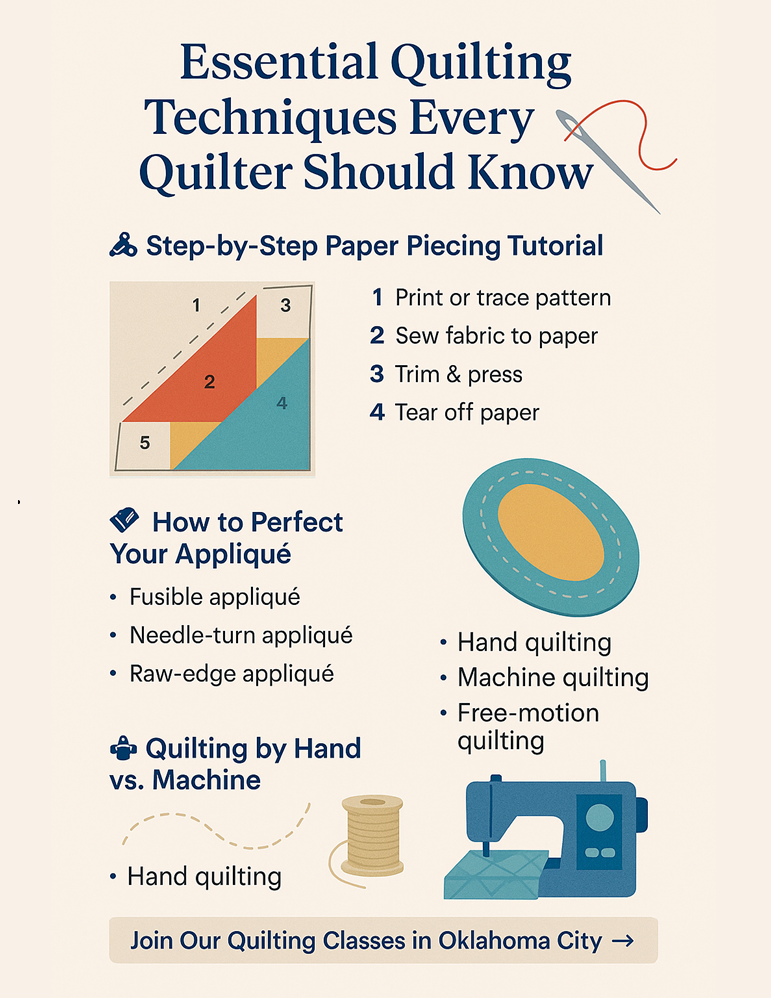
Infographic showing essential quilting techniques including paper piecing, appliqué, and quilting by hand vs machine, with step-by-step visuals and a call to join quilting classes in Oklahoma City

Essential Quilting Techniques Every Quilter Should Know

Welcome to Sew Social’s Quilting Techniques

Quilting is a creative journey filled with color, texture, and endless possibilities. Whether you’re brand new to quilting or looking to strengthen your foundation, mastering essential techniques will help you create beautiful, long-lasting quilts with confidence. At Sew Social, we teach women how to build strong quilting skills step by step, ensuring every project feels enjoyable and achievable. These core techniques form the heart of quilting and open the door to more advanced projects as your skills grow. 
 
One of the most important first steps is learning accurate fabric cutting. Precise cutting ensures pieces align correctly, seams match, and finished blocks come together neatly. Tools like rotary cutters, cutting mats, and rulers make this process easier, but practice and patience are key. Many quilters find that mastering accurate cutting dramatically improves their results.
 
Next comes understanding seam allowances. Quilting typically uses a quarter-inch seam, and consistency is essential for blocks to fit together correctly. Practicing with seam guides or specialty presser feet helps beginners develop accuracy, making every quilt more professional-looking.
 
Pressing is another foundational skill. Pressing seams — not ironing — helps maintain shape and prevents distortion. Knowing when to press seams open or to one side is part of building strong quilting habits. This technique makes assembling blocks smoother and creates crisp lines that elevate your work.
 
Piecing is where creativity comes alive. Learning how to arrange blocks, match seams, and sew components together transforms small pieces of fabric into complete quilt tops. Beginners often start with simple patterns like nine-patch blocks or half-square triangles, gradually moving on to more complex designs.
 
Basting and quilting bring the top, batting, and backing together. Techniques like safety pin basting, spray basting, or thread basting secure the layers before stitching. Machine quilting, straight-line quilting, or hand quilting each add texture and personality to your finished piece.
 
Finally, binding completes the quilt. Attaching binding neatly and evenly creates a polished edge and gives your quilt a finished look. Learning these essential techniques gives quilters confidence and makes every project more enjoyable. Whether you’re taking your first quilting class or improving your skills, mastering the basics will help you create quilts you’re proud of.
 
Every quilter has their favorite technique — and part of the joy of quilting is learning something new with every project. At Sew Social, we love helping both beginners and experienced quilters discover simple, beautiful methods that bring each fabric pattern to life.
 
In this guide, we’ll explore three essential quilting techniques — paper piecingappliqué, and hand quilting — along with helpful tips to get you started.


Welcome to the Art of Easy Quilting

At Sew Social, we believe quilting should be joyful—not stressful! Whether you’re just threading your first needle or have been quilting for years, starting with easy quilting designs can help you build confidence, explore color, and create something beautiful you’ll be proud to show off.
 
In this post, we’ll share simple but stunning quilt ideas that are perfect for beginners and quick-finish projects for experienced quilters.
 

Step-by-Step Paper Piecing Tutorial

What is paper piecing?

Paper piecing (also called foundation piecing) is a precise quilting method where you sew fabric directly onto a printed paper pattern. It’s perfect for achieving sharp points and complex geometric shapes that would be tricky to do by eye.

🪡 Here’s how to do it:

  1. Sew directly along the printed lines. Use a shorter stitch length (1.5–2.0) so it’s easy to tear off later.

  2. Trim and press as you go. Each piece builds on the last, creating perfect seams.

  3. Remove the paper. Once your block is complete, gently tear the paper away.

Pro Tip: Use a light box or window to align fabrics accurately and avoid gaps.

Why it’s great:

Paper piecing helps you make stunning star blocks, intricate shapes, and detailed designs — even if you’re new to quilting.

How to Perfect Your Appliqué

Appliqué is the art of attaching smaller fabric shapes onto a larger quilt block — think flowers, hearts, or letters. It’s one of the most creative and expressive quilting methods!

 Techniques to try:

  • Needle-Turn Appliqué: Fold edges under with your needle for a smooth, hand-sewn finish.

  • Raw-Edge Appliqué: Leave edges raw and secure them with a tight zigzag or blanket stitch for a textured, modern look.

Tips for clean results:

  • Match your thread color to your appliqué fabric.

Creative Idea: Combine appliqué shapes with pieced blocks to make personalized baby quilts or wall hangings.

Quilting by Hand vs. Machine

Whether you quilt by hand or machine depends on your style, patience, and the look you want to achieve. Both methods have their charm.

Technique Advantages Best For
Hand Quilting Relaxing, vintage look, portable Traditional quilts, heirloom projects
Machine Quilting Faster, durable, great for large quilts Modern designs, textured stitching
Free-Motion Quilting Artistic freedom, creative textures Custom patterns and curves

Hand Quilting Tips:

  • Use a thimble and short quilting needle.

  • Keep stitches small and even.

  • Mark your quilting lines lightly with a water-soluble pen.


Machine Quilting Tips:

  • Use a walking foot for straight lines or a darning foot for free motion.

  • Adjust your stitch length for smooth, even results.

  • Test your tension on scrap fabric before starting.

🧵 No matter your method, quilting is about creativity and joy — not perfection!


Join Our Quilting Classes in Oklahoma City →

Learn these techniques hands-on at Sew Social’s in-person quilting classes!
Whether you want to master paper piecing, appliqué, or machine quilting, our friendly instructors (Joyce and Mary) will guide you every step of the way.

📍 Visit our studio: 6023 NW 120th Ct, Oklahoma City
🕓 Hours: Mon–Fri, 9 AM – 7PM
📞 Call: Mary – 405-413-0019 | Joyce – 425-830-4050